Navigate
HomeOverview AboutWhy Nova Trading Contractors & PlumbersTrade rates & referrals ContactVisit or WhatsApp
Products
GI PipesTata & Jindal MS PipesJindal Star & Tata CPVC PipesAshirvad Column PipesBorewell range
Guides
GI vs MSMaterial comparison GI Price GuideHyderabad rates Borewell GuideColumn vs GI CPVC vs PVCPlumbing guide CPVC vs GI vs MSFull comparison
Home Building
House That Lasts 100+ YrsStructure guide Plumbing & ElectricalNew home planning Wall MaterialsAAC vs Clay vs Fly Ash
Send Requirement List
Home → AAC vs Clay vs Fly Ash Bricks

AAC Blocks vs Clay Bricks
vs Fly Ash Bricks

Wall material is one of the most overlooked decisions in home construction — yet it affects thermal comfort, structural load on your RCC frame, build speed and how the home feels for generations. Here's a full comparison for Hyderabad and Telangana's climate.

Construction Guide 2026 Hyderabad · Telangana
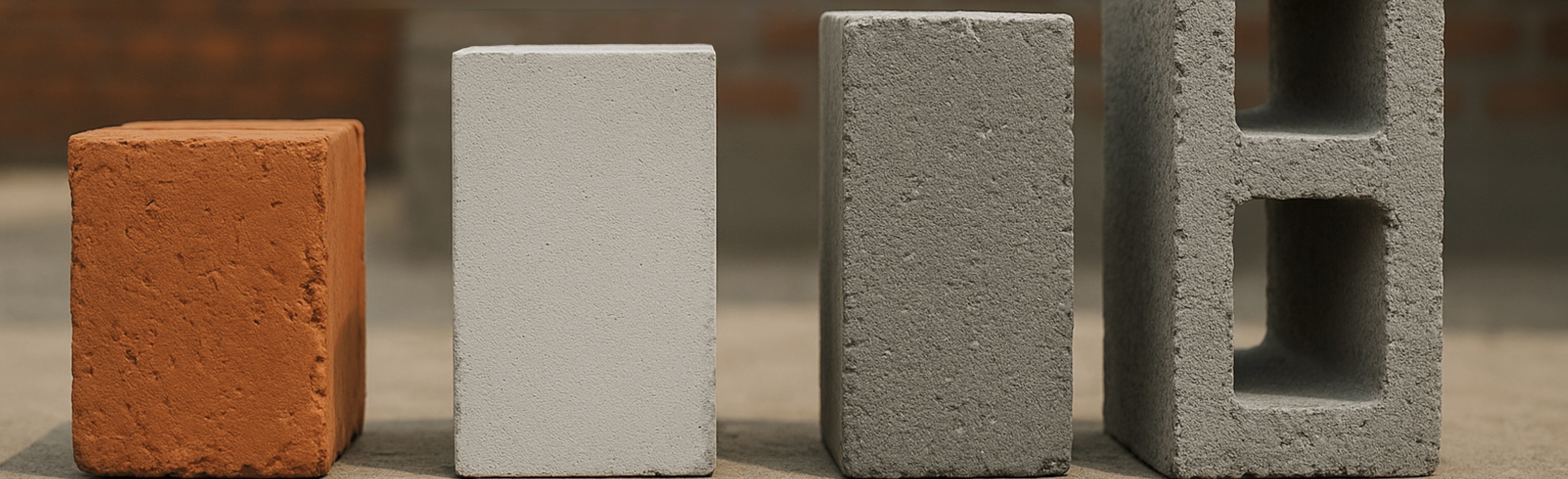
Comparison of Brick, AAC block, Fly Ash brick and Hollow concrete block side by side
The Four Main OptionsFrom left: traditional clay (red) brick, AAC block, fly ash brick, and hollow concrete block — each with distinct weight, insulation and cost characteristics
Clay Brick AAC Block Fly Ash Brick Hollow Concrete Block

The Short Answer

For modern construction in a hot climate: AAC Blocks. For a traditional feel on a low-rise home: well-fired Clay Brick.

AAC (Autoclaved Aerated Concrete) blocks insulate better, weigh roughly half as much as red clay brick, and go up faster — which is why they've become the default for new multi-storey homes across urban India. Clay brick remains a legitimate, time-tested choice where the traditional aesthetic matters and the building is low-rise. Fly ash brick is a reasonable middle ground where AAC isn't locally available or budget is tight.

Full Comparison

~50%Less structural weight with AAC vs red brick
4–6°CCooler interiors with AAC walls in Hyderabad summer
0.24W/mK — AAC thermal conductivity (vs 0.9 for brick)
~25%Faster masonry with AAC vs clay brick
PropertyAAC BlocksClay (Red) BricksFly Ash Bricks
Thermal conductivity ~0.24–0.30 W/mK (best insulation) ~0.6–0.9 W/mKModerate — better than clay, behind AAC
Weight on structure ~50% lighter than red brick Heaviest of the threeModerate
Compressive strengthSufficient for RCC-frame infill walls3.5–7 MPa (varies with kiln quality)Generally consistent, moderate strength
Construction speed ~20–25 m²/day per mason~12–15 m²/day per masonSimilar to clay brick, more uniform shape
Sound insulationGood — porous structure absorbs soundGood — dense structure reflects soundModerate
Fire resistance Up to ~4 hoursGoodGood
Environmental impact Uses fly-ash byproduct, less topsoil use Reduces topsoil, kiln emissions regulated in several states Uses industrial waste, helps disposal
Typical unit costHigher per block (~₹60–70), often similar total cost after labour/mortar savingsLower per piece, but more labour & plasterOften slightly below red brick
Verdict: AAC blocks win on thermal comfort, structural dead load and build speed — the three things that matter most for a multi-storey RCC-frame home in a hot climate. Clay brick remains valid for a traditional aesthetic on a lower-rise home. Fly ash brick is the practical budget option where AAC isn't easily available.
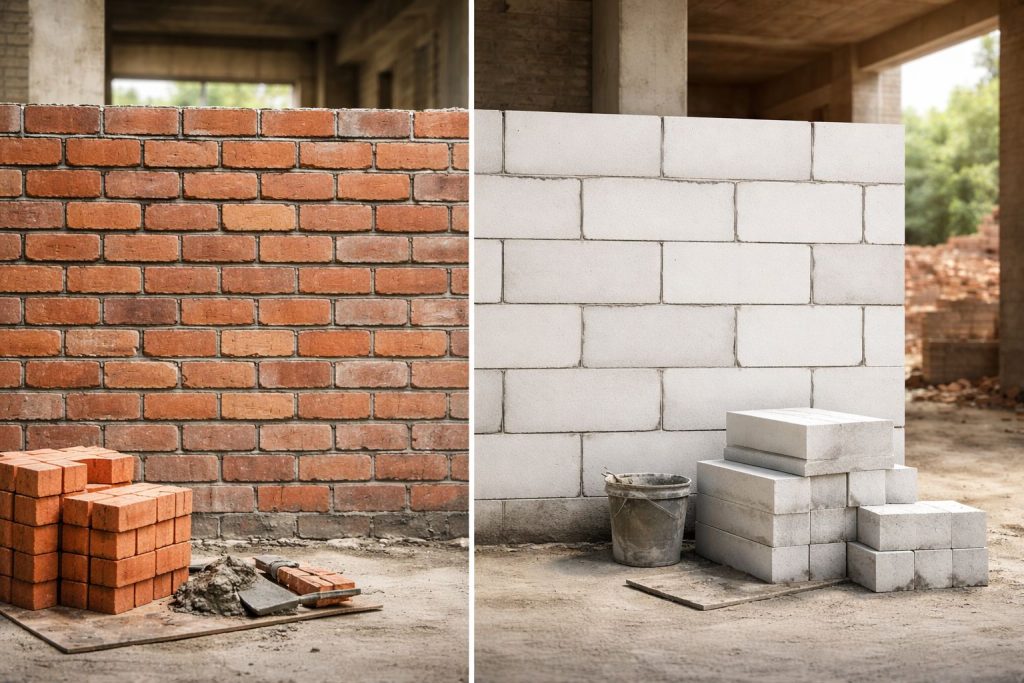
Red clay brick wall vs AAC block wall on construction site
On Site: Clay vs AACRed clay brick wall (left) vs. AAC block wall (right) — note the larger block size, neater mortar joints, and lighter colour of the AAC wall
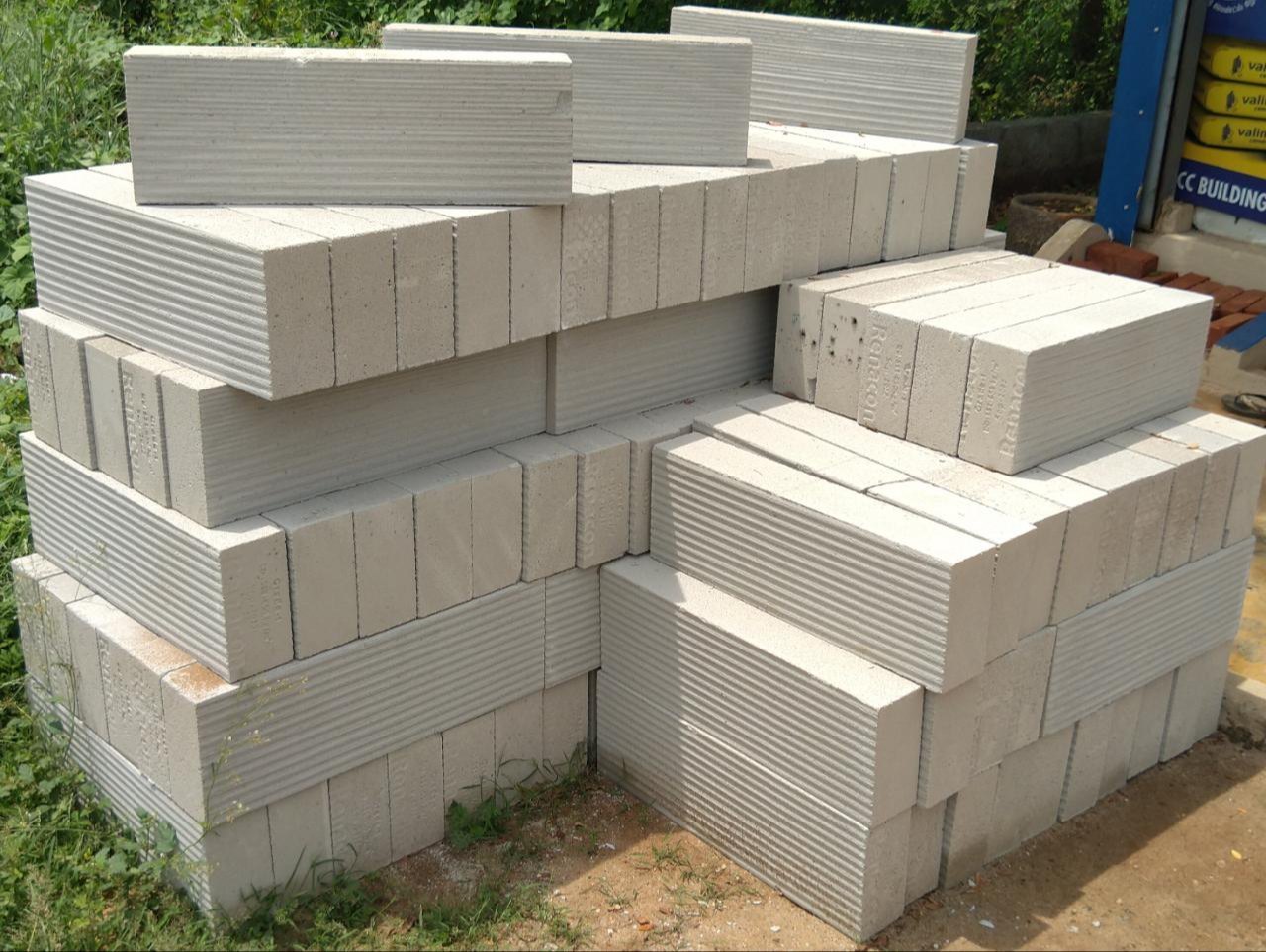
Stacked AAC blocks with ribbed surface for mortar bonding
AAC Block DetailThe ribbed surface improves mortar bonding without needing thick joints. Blocks are cut cleanly for openings — no half-brick fitting needed.

When to Choose Each

Best for Modern Builds
AAC Blocks
Cement, lime, fly ash & an aerating agent, autoclave-cured
  • Best thermal insulation — cooler interiors in summer
  • ~50% lighter — reduces load on RCC columns
  • Fastest to lay, fewer joints, less mortar
  • Good fire resistance & sound insulation
  • Needs masons familiar with block-specific mortar
Best for Traditional Feel
Clay (Red) Bricks
Burnt clay, fired in kilns at 900–1000°C
  • Time-tested for centuries — many century-old homes use it
  • Widely available, masons experienced everywhere
  • Strong thermal mass, traditional look
  • Absorbs heat through the day, radiates it indoors at night
  • Heaviest option — more structural load
Best for Budget Builds
Fly Ash Bricks
Made from thermal power-plant fly-ash byproduct
  • More uniform shape than clay brick — less mortar waste
  • Often priced at or below red brick
  • Thermal performance better than red brick
  • Behind AAC on insulation & structural weight savings

Why It Matters More in Hyderabad's Climate

Telangana sees a long, intense summer with daytime temperatures regularly crossing 40°C. Walls with high thermal conductivity — like standard red brick — absorb heat through the day and continue radiating it indoors well after sunset, pushing up AC running hours and electricity bills. Lower-conductivity materials like AAC blocks slow that heat transfer, keeping interiors measurably cooler during the day and more stable overnight. For homeowners building in and around Hyderabad, this single material choice has a real, ongoing effect on comfort and running cost for as long as the home stands.

Full Material Range
Fly Ash Bricks Red Bricks CLC Blocks AAC Blocks Solid Concrete Blocks

Every material on this list has a specific use case — don't let availability or habit override the right choice for your climate.

Frequently Asked Questions

Are AAC blocks strong enough for a 2–3 storey house?
Yes. In an RCC-framed home, walls are non-structural infill rather than load-bearing, so AAC blocks' compressive strength is more than sufficient. They're now used extensively in mid-to-high-rise apartments and villas across India.
Do AAC blocks need special masons or different mortar?
AAC blockwork uses a thin-bed block-jointing mortar rather than the thicker cement-sand mortar used for clay brick, and masons benefit from familiarity with the system. It's now common enough in most Indian cities that experienced AAC masons aren't hard to find.
Is fly ash brick the same as red brick in strength?
Fly ash bricks are generally comparable to or slightly more consistent than red clay bricks in strength, since their manufacturing process is more controlled. Quality still varies by manufacturer, so checking for proper curing and consistent sizing matters.
Will AAC blocks actually reduce my AC electricity bill?
AAC's lower thermal conductivity measurably reduces heat transfer into the home compared to red brick, which can meaningfully cut cooling load in a hot climate like Hyderabad's. The exact saving depends on other factors too — roof insulation, window glazing and orientation — but wall material is one of the biggest levers.
Can I mix AAC and clay brick in the same house?
It's possible — for example, AAC on upper floors to save structural load, clay brick at ground level for aesthetics — but it adds complexity in detailing the junction between materials. Most homeowners get better results choosing one material consistently and discussing any mixed approach with their structural engineer first.

Once Your Walls Are Decided, Plan Plumbing & Electrical Next

We supply the CPVC, GI, MS and column pipes that go inside your build — ready stock at Old Ghasmandi, Secunderabad

Get Expert Advice on WhatsApp Read the Plumbing & Electrical Guide

More Guides & Products

Related Guide
House That Lasts 100+ Years
RCC frame & structure guide →
Related Guide
Plumbing & Electrical Planning
CPVC, copper wiring & future-proofing →
Buy Now
CPVC Pipes — Ashirvad
For indoor hot & cold water →
Buy Now
GI Pipes — Tata & Jindal
For structural & tank-stand use →